Imagine a US-based DeFi user preparing to swap tokens before a volatile market open. The wallet balance looks correct, the decentralized application appears familiar, and the transaction seems routine. Yet the important question is not whether the button says “Confirm.” It is whether the wallet can help the user understand what that confirmation actually authorizes. A browser extension such as Rabby sits at this boundary between a website and a blockchain wallet. Downloading it is therefore not merely an installation task. It is the first step in constructing a safer decision process for transactions that may be irreversible.
That distinction matters because many DeFi losses do not begin with a broken blockchain. They begin with a misleading website, an overbroad token approval, a malicious signature request, or a user acting too quickly. Wallet software can improve visibility into those risks, but it cannot eliminate them. The practical goal is not “maximum security” in the abstract; it is better information before authorization, combined with disciplined account and browser hygiene.
From Simple Wallets to Transaction-Aware Interfaces
Early cryptocurrency wallets were often understood as key containers: software that held or accessed the cryptographic credentials needed to control an address. That model was useful but incomplete for modern DeFi. A user may interact with lending markets, decentralized exchanges, liquid staking protocols, bridges, governance systems, and non-fungible token marketplaces, all through ordinary browser pages. The wallet is no longer just storing access. It is mediating a series of software interactions whose consequences can be difficult to read from raw transaction data.
This historical shift explains why browser extensions became important. A wallet extension can connect a decentralized application to a user-controlled account, expose network and account information, and present signing requests in a more understandable form. The interface acts as a translation layer between contract instructions and human judgment. That translation is valuable, but it is also a boundary condition: a wallet can display what it can infer from the request and available data, while the user still has to evaluate the application, the contract, and the broader economic risk.
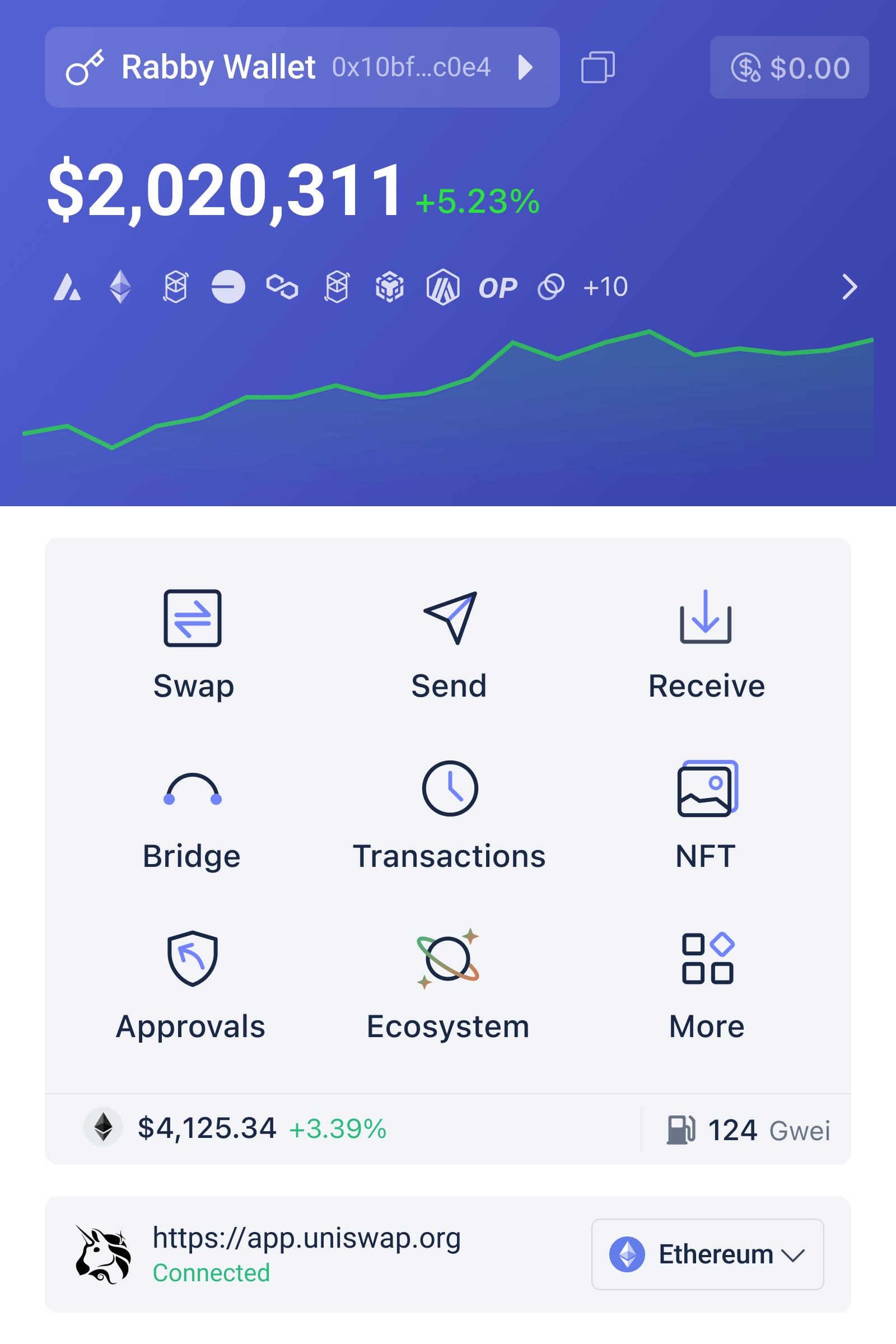
Rabby is commonly considered in this transaction-aware category of wallet extension. For a reader searching for a rabby extension download, the safest principle is to begin with the project’s official distribution route and verify that the browser is installing the expected publisher and extension. Search results, advertisements, social-media posts, and unsolicited support messages can imitate legitimate download pages. The installation source is part of the security model, not an administrative detail.
What the Browser Extension Actually Does
A browser wallet extension generally performs three connected functions. First, it manages access to wallet accounts through locally controlled keys or wallet connections. Second, it allows decentralized applications to request actions such as signing a message, sending assets, or calling a smart contract. Third, it presents those requests to the user for approval. The extension does not make a blockchain transaction safe simply by displaying it. Its role is closer to a cockpit instrument panel: useful readings can improve decisions, but the aircraft can still be pointed in the wrong direction.
The most important mental model is to separate three events that users often collapse into one: connecting a wallet, signing a message, and submitting a blockchain transaction. Connecting normally gives a site visibility into an address and permission to request actions; it does not by itself transfer funds. A message signature may authenticate an action off-chain, but some signatures can authorize permissions or be used in deceptive workflows. A transaction changes blockchain state and may transfer assets, create approvals, or interact with a contract. These categories overlap in user experience, yet they differ materially in risk.
Token approvals illustrate why this distinction matters. In many token-based applications, a user first authorizes a contract to spend a specified asset and then executes a separate action such as a swap or deposit. An approval can be convenient because it reduces repeated prompts, but an allowance that is larger than necessary can expand the consequences of a later compromise. The risk is not always visible from the final trade alone. A careful user asks: which contract is receiving permission, which token is covered, how much can be spent, and whether the permission remains useful after the intended action?
Transaction simulation and warning systems can help expose some of these consequences before signing. They may identify expected asset changes, suspicious patterns, or a mismatch between the application’s apparent purpose and the requested call. Such tools are best understood as risk signals rather than guarantees. Simulations depend on the current state of the chain, the quality of decoded contract information, and the ability of the software to model unusual or adversarial behavior. A result that looks normal is not proof that the protocol is trustworthy.
Installation Is a Security Procedure, Not a Single Click
A robust Rabby wallet extension setup begins before the download. Use a browser profile that is reasonably clean, update the browser and operating system, and remove extensions that are unnecessary or untrusted. Browser extensions can access sensitive web activity depending on their permissions. Fewer extensions reduce the number of components that could interfere with a wallet session, imitate a prompt, or expose information about a user’s activity.
During setup, treat the recovery phrase as the highest-value secret in the process. It should never be entered into a website, online form, cloud note, email draft, or chat conversation. Anyone who obtains it may be able to recreate control of the wallet independently of the browser extension. A wallet password or local unlock code protects access on a particular device; it does not replace the recovery phrase and does not make a leaked phrase safe.
For substantial holdings, a hardware wallet can change the risk profile by keeping key operations more isolated from the browser. It does not remove the need to inspect transactions, however. A hardware device can faithfully sign a harmful request if the user approves it. The trade-off is operational: stronger key isolation may introduce additional steps, device-management responsibilities, and occasional compatibility friction. Security improves when those extra steps are understood and used consistently, not when they are treated as a magical shield.
After installation, a sensible first test uses a small amount and a low-stakes action. Check that the expected account is selected, that the network is correct, and that the asset displayed by the wallet matches the intended asset. DeFi users should be particularly cautious when a website requests a network switch, a token approval, or a signature immediately after connection. Speed is not a security property. A short pause to identify the contract and expected state change can be more valuable than an attractive interface.
The Common Failure Modes Behind DeFi Wallet Losses
Phishing remains effective because it exploits context rather than cryptography. A fraudulent site may reproduce a legitimate brand, use a similar domain, or appear in a search result at the moment a user is trying to solve a problem. The wallet extension may still show a technically valid request because the request comes from the site the user opened. This is a crucial misconception: a wallet warning system can analyze a request, but it cannot always determine whether the user intended to visit that site in the first place.
Another failure mode is approval fatigue. Repeated prompts train users to click through them, especially when gas fees are low or a trade appears time-sensitive. Yet approvals can be more consequential than a single swap. A disciplined workflow distinguishes a one-time, narrowly scoped permission from an unlimited or long-lived allowance. Where the application supports it, limiting the amount to what the transaction requires can reduce exposure. Users should also periodically review and revoke permissions they no longer need, while remembering that revocation itself is an on-chain transaction with its own fee and network requirements.
Blind signing is a related problem. Some requests are difficult to interpret because the contract data is not fully decoded or because the action involves a specialized protocol. In that situation, uncertainty is itself information. If the user cannot explain what will leave the wallet, what permission will be created, or what contract will receive it, postponing the action is rational. A failed opportunity is usually recoverable; an irreversible transfer may not be.
There are also risks outside the extension. A compromised computer, malicious browser update, stolen recovery phrase, fake customer-support account, or vulnerable smart contract can defeat careful transaction review. This is why DeFi security is layered. The wallet interface addresses one layer—authorization visibility—but users also need secure devices, verified application domains, controlled key storage, cautious permissions, and realistic limits on the amount kept in a hot wallet.
A Reusable Decision Framework for Each Transaction
Before approving a request, ask four questions. What am I trying to do? If the answer is “swap a specific token” but the request involves an unrelated contract or asset, stop. What will change? Identify the tokens, balances, permissions, and network state expected after the action. Who receives authority? Separate the application’s front end from the contract address that will execute the call. What happens if the application, contract, or browser session is compromised tomorrow? This final question turns an isolated approval into a risk assessment.
The framework is deliberately simple because complex interfaces can create false confidence. A wallet may display warnings, estimated outcomes, and contract information, but interpretation remains contextual. A known contract can later be upgraded, a legitimate domain can be compromised, and a familiar protocol can contain economic risks unrelated to wallet theft. Conversely, an unfamiliar contract is not automatically malicious, although unfamiliarity should raise the evidence threshold before signing.
For US users, practical details such as network fees, tax records, and consumer-protection expectations also matter. On-chain activity is generally difficult to reverse, and a bank-style dispute process may not exist for a mistaken wallet authorization. Keeping records of transactions, approvals, and protocol interactions can help with accounting and incident review, but records do not restore lost assets. The operational lesson is to decide exposure in advance: use a separate wallet for experimentation, keep long-term holdings away from routine browser activity, and avoid treating a hot wallet as a permanent vault.
What the Current State Suggests
No recent project-specific news is available in the supplied weekly context, so there is no responsible basis for attributing a newly announced feature or change to Rabby here. The broader direction of wallet design is nevertheless clear: as DeFi transactions become more composable, interfaces are being asked to explain not only what a user is signing but also what a chain of contracts may do afterward. That is a useful development, provided users understand the difference between improved visibility and verified safety.
The next meaningful improvements are likely to be judged by practical signals rather than promotional claims. Can a wallet explain complex calls in language a non-specialist can test? Can it distinguish a harmless connection from a durable authorization? Does it remain useful across networks without encouraging users to ignore network-specific differences? Can advanced warnings avoid overwhelming experienced users while still helping newcomers? These are open design questions. Better alerts may reduce some errors, but excessive warnings can also produce alert fatigue, the same behavioral problem security tools are meant to solve.
Return to the user preparing that morning swap. The strongest protection was not the existence of an extension alone. It was a sequence: obtain the software from a trusted source, protect the recovery material, verify the site and network, understand the requested authority, limit permissions where possible, and use a wallet balance proportionate to the experiment. Rabby can be part of that process, particularly when its interface makes transaction consequences easier to inspect. The durable principle is broader: a crypto wallet should be treated as a transaction review instrument, not as an automatic guarantee that every connected DeFi application is safe.
FAQ: Rabby Extension and DeFi Security
Is downloading a wallet extension enough to protect my DeFi funds?
No. A reputable extension can improve transaction visibility and help identify some suspicious requests, but it cannot secure a compromised device, recover a leaked recovery phrase, validate every smart contract, or reverse an approved blockchain transaction. Security depends on the entire workflow, including download source, browser hygiene, key management, application verification, and transaction review.
Should I connect my main wallet to every DeFi website?
Generally, limiting exposure is safer. A separate wallet with a controlled balance can be used for unfamiliar applications or experiments, while long-term holdings remain isolated from routine browser activity. Separation does not remove smart-contract risk, but it can reduce the amount at stake if a site, approval, or signing decision goes wrong.
What should I do if a transaction warning is unclear?
Pause rather than signing through uncertainty. Confirm the application domain, network, contract, asset, allowance, and expected balance change using information you can independently verify. If those elements cannot be explained, cancel the request and investigate further. In DeFi, hesitation is often a sensible control, not a failure to act.